The Molecular Architecture of the Mind

This domain explores how the mind’s intricate biological foundations give rise to resilience, meaning, and transformation. Our aim is not only to understand how the mind reduces suffering, but how it constructs growth, insight, and human flourishing from its very molecular design.

Five core molecular domains consistently ground our scientific understanding of consciousness. Together, they outline how biological systems give rise to experience:

  • 1. Neural and Biological

    Consciousness arises from the brain and nervous system, shaped by neural activity, neurotransmitters, and brainwave patterns. Practices like meditation, breathwork, and movement influence brain regions such as the prefrontal cortex and limbic system. By studying EEG states, heart rate variability, and hormonal responses, we can connect subjective experiences with measurable biological processes, bridging inner awareness and empirical science.

  • 2. Molecular and Cellular Mechanisms

    At the molecular scale, consciousness is rooted in the electrochemical dynamics that sustain neural communication. Patterns of gene expression, receptor signaling, and glial modulation create the substrate from which cognitive states emerge. By tracing how molecular activity translates into neural computation, this domain seeks to bridge biochemistry and experience, linking synaptic plasticity, neuromodulation, and metabolic regulation to the phenomena of awareness.

  • 3. Systems and Network Dynamics

    At the systems level, consciousness arises from the coordinated dynamics of distributed neural networks. Large-scale interactions among cortical and subcortical regions integrate sensory, emotional, and cognitive processes into unified experience. This domain investigates how oscillatory synchrony, information flow, and recurrent connectivity enable the brain to bind disparate signals into the coherent field of awareness.

  • 4. Embodiment and Interoception

    Consciousness is not confined to the brain, but is continuously shaped by the body’s internal physiology. This domain examines how interoceptive signals from the heart, lungs, gut, and autonomic nervous system influence perception, emotion, and self-awareness. Through the constant exchange of neural and visceral information, the body serves as both the source and regulator of subjective experience. By studying pathways such as the vagus nerve, insular cortex, and hypothalamic networks, this research area investigates how internal sensing stabilizes affect, grounds cognition, and gives rise to the feeling of being alive from within.

  • 5. Altered and Adaptive States

    Consciousness is dynamic, continuously modulated by physiological, pharmacological, and experiential conditions. This domain investigates how states such as sleep, meditation, anesthesia, psychedelics, and trauma reshape neural activity, metabolism, and network connectivity. By comparing ordinary and altered states, it seeks to identify the biological signatures that distinguish consciousness from its absence or distortion. These investigations reveal how adaptive plasticity, through neurochemical modulation, oscillatory reorganization, and gene expression, enables the brain to expand, disrupt, or recover patterns of awareness across contexts.

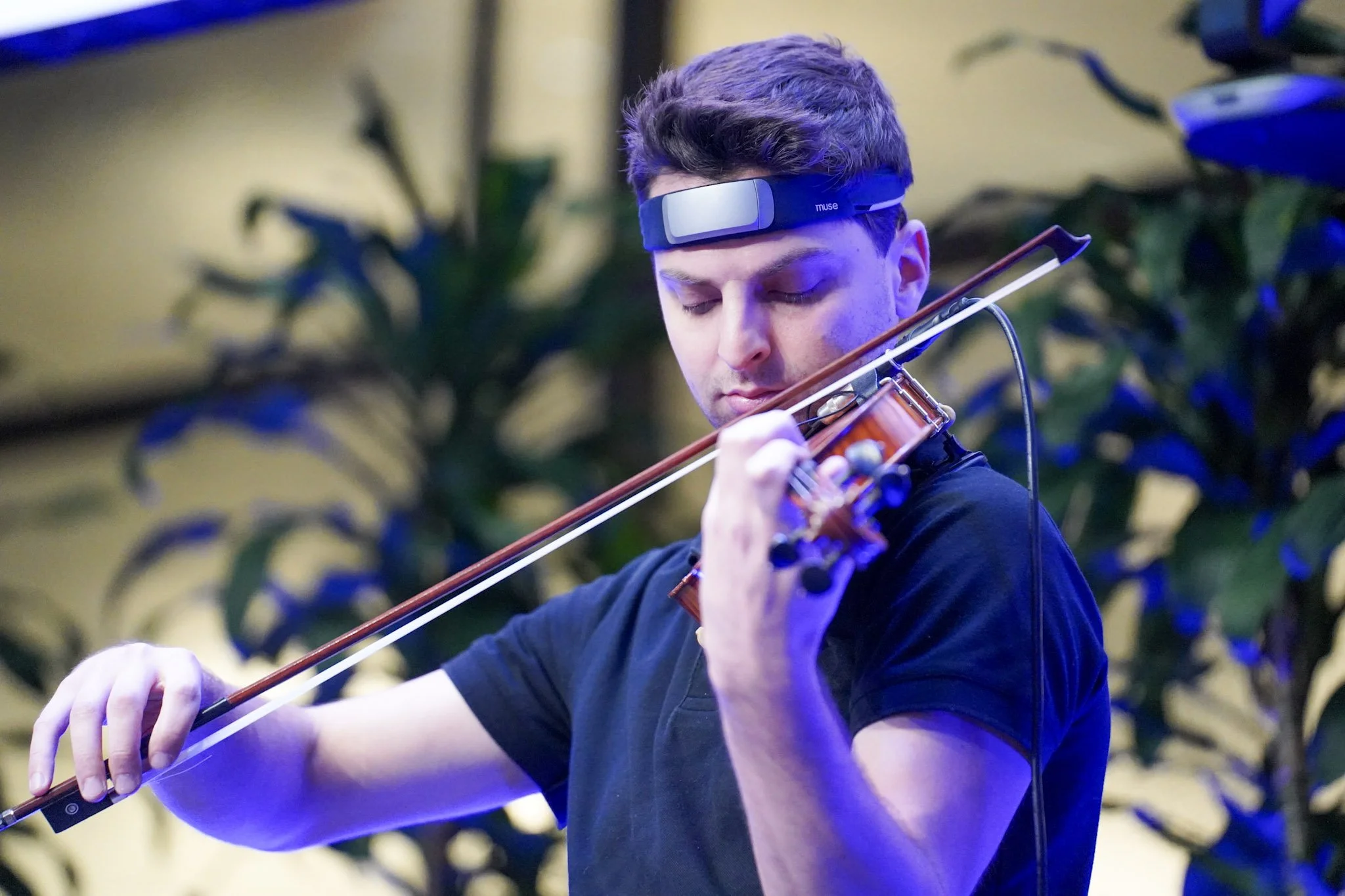
EEG provides a direct, real-time look into the brain’s electrical activity, offering a scientific way to track and measure different states of consciousness. By mapping brainwave patterns, such as the calm focus of alpha waves or the heightened awareness of gamma waves, to specific mental states, researchers can bridge the gap between subjective experience and objective data.

EEG Brainwave Frequencies & Consciousness Research

This is crucial because it allows scientists, technologists, and philosophers to:

  • Identify the neural signatures of awareness, meditation, dreaming, and peak experiences.

  • Compare and quantify altered states, whether self-induced, therapeutic, or spontaneous.
Leading Questions

  • Mind in Balance: Mindfulness & Mental Health

    Can meditation rewire the brain’s response to stress and trauma?

    → How can contemplative practice support resilience and well-being?

    How does mindfulness influence cognitive, emotional, and physiological health?

  • Rewiring the Self: Neuroplasticity & Inner Training

    Can neurofeedback enhance or accelerate inner development?

    → How does the brain change through disciplined inner practice?

    How do we measure growth in dimensions that are qualitative or spiritual?

  • Crossing Thresholds: Transformative & Altered States of Consciousness

    How do extraordinary states catalyze lasting psychological change?

    What mechanisms underlie mystical or peak experiences?

    Can altered states unlock new modes of empathy, insight, or healing?

  • The Narrative Self: Meaning-Making & Identity Construction

    How do we craft the story of who we are?

    Can therapy, reflection, or crisis reorient one’s sense of identity?

    What role do stories play in trauma, resilience, and recovery?

  • Ethics of Inner Enhancement: Responsibility, Agency & Purpose

    What are the moral implications of optimizing the human mind?

    Should inner development be a public health priority, or a personal journey?

    How do we navigate the boundary between healing and optimizing?

For Our Reading List & Curated Resources, Please Click Below